BODY SYMPHONIES
GROUP SHOW
Curated by Nicolas Dewavrin and Marion Guggenheim
PARIS
June 2024
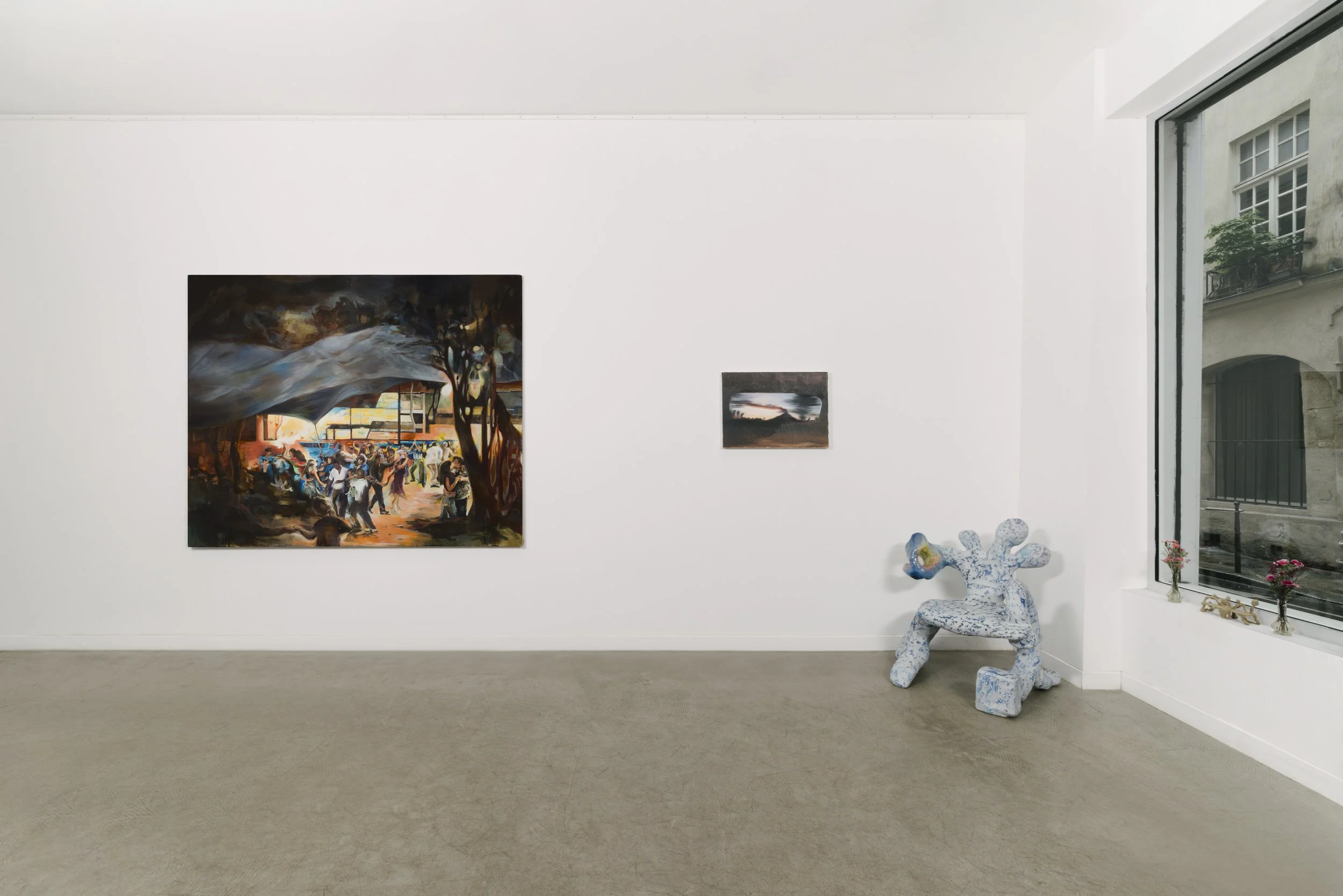
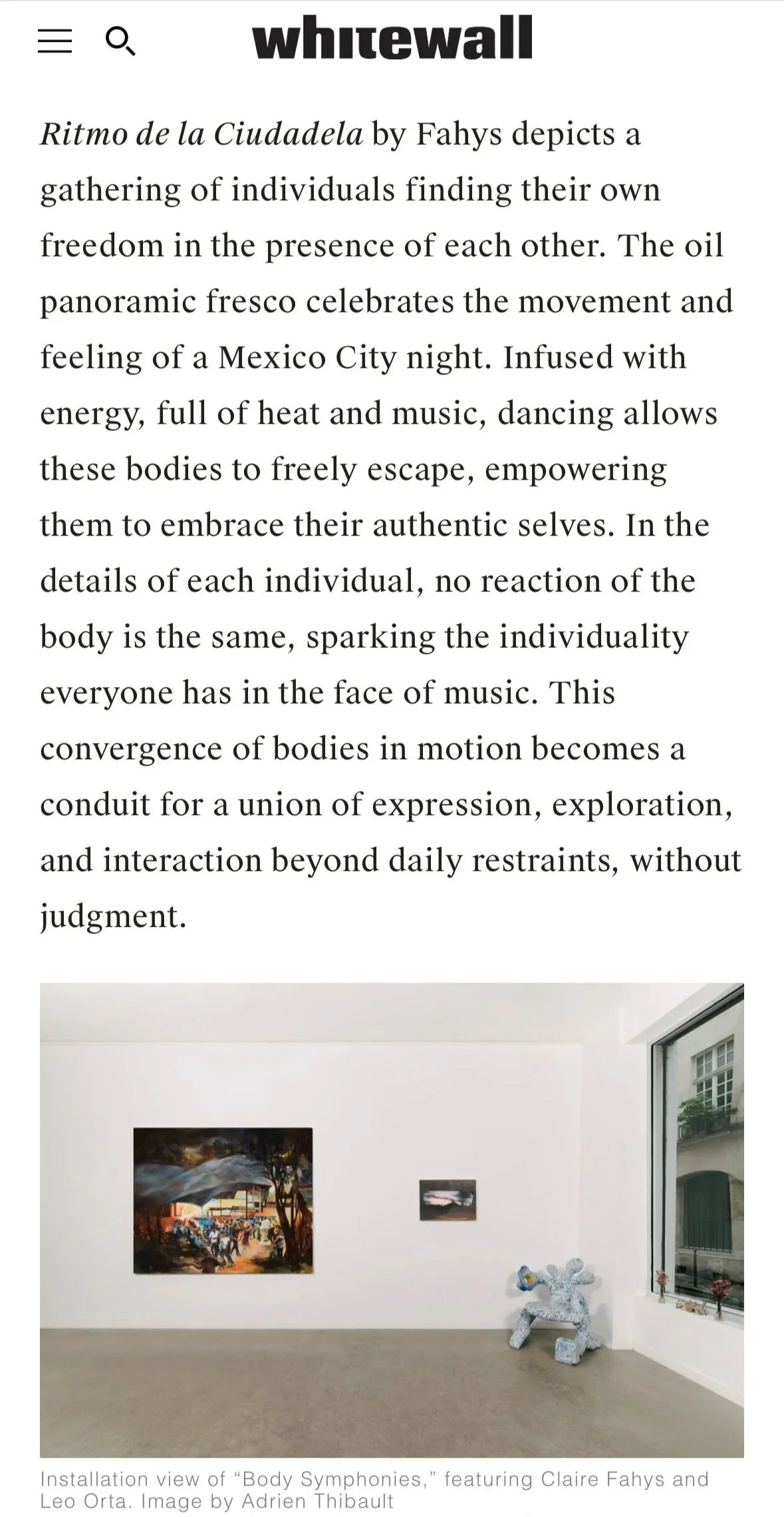
Installation view featuring a work from Leo Orta (right)
BODY SYMPHONIES
What do bodies do when they dream? How do they inhabit space, how do they reimagine it? This exhibition brings together the practices and perspectives of eleven artists to explore the life of the body when, beyond the control of the mind, it enters into resonance with itself. As in a symphonic score, each work explores the liberating impulse of the body, capable, through its movement, amplitude, and density, of embodying itself beyond what is expected of it, in its social functions, gender, and sexuality.
The bodies abstract themselves from the time of day for which they are responsible, to commune in their own space, that of the night. Claire Fahys celebrates collective movement in a panoramic fresco in which the Mexico City night vibrates, full of heat and music. Dance is a time removed from the rectitude of our lives, a moment of both union and confrontation, as in the work of Bianca Argimon, who reappropriates the world of bullfighting, subverting its macho dimension through her heroine.
Halfway between the impulse to live and the impulse to die, the dance turns the human into a world of myths. Malu Dalla Piccola and Alex Foxton bring together human figures and mythical creatures in an outstretched hand or a macabre round. Thus the young woman, whose desire coos even in the undulations of her dress, dances with a centaur imp. For both of them, as in Odilon Redon’s Symbolist paintings, the periwinkle or deep blue that suffuses the bodies is the sign of an introspective shift towards dreams.
In the pursuit of intimacy, the exhibition offers a moment to pause and reflect on the pulsations that bring bodies together. In Shuo Hao’s palette, bodies unite to the point of incandescence, withdrawing from the rest of the world to take refuge in their mutual warmth, where they rediscover, perhaps, the fullness of their fetal state. If this desire for the fusion of bodies lends itself to the sweetness of dreamlike imagery, it is also expressed in a pop hyperrealism, as in the work of Ricardo Fumamal, who makes their pulsations, their wetness, and their veins palpable across the surface of the canvas.
The utopian bodies transcend their limits. Giovanni Bassan gives form to the dream’s ability to make several lives cohabit within us, and the being dancing in its sleep thus annihilates the uniqueness of the body. Through movement, it unfolds, comes alive, and rises above its own horizontality. In George Rouy’s work, the body loses its verticality, its contours, and its color. Just as in music, the free form of the rhapsody has shattered the shackles of classical composition, his painting reveals, like a fan, the multiple identities to which the body aspires.
In its mutations and improvisations, the body is abstracted until its human form dissolves. Leo Orta’s surrealist pieces and John Fou’s colorful motifs of hybrid organic forms and seaweed bodies draw on the theme of metamorphosis to abolish the boundary between the human and the vegetable. In Jamiu Agbole’s work, blue always reveals a mental landscape for the body to navigate in fresh waters, in the coolness of the moss bordering the aquatic expanse. An imaginary place where, returning to the purity of its organic origins, the body becomes one with the elements.
Margaux Lavergne
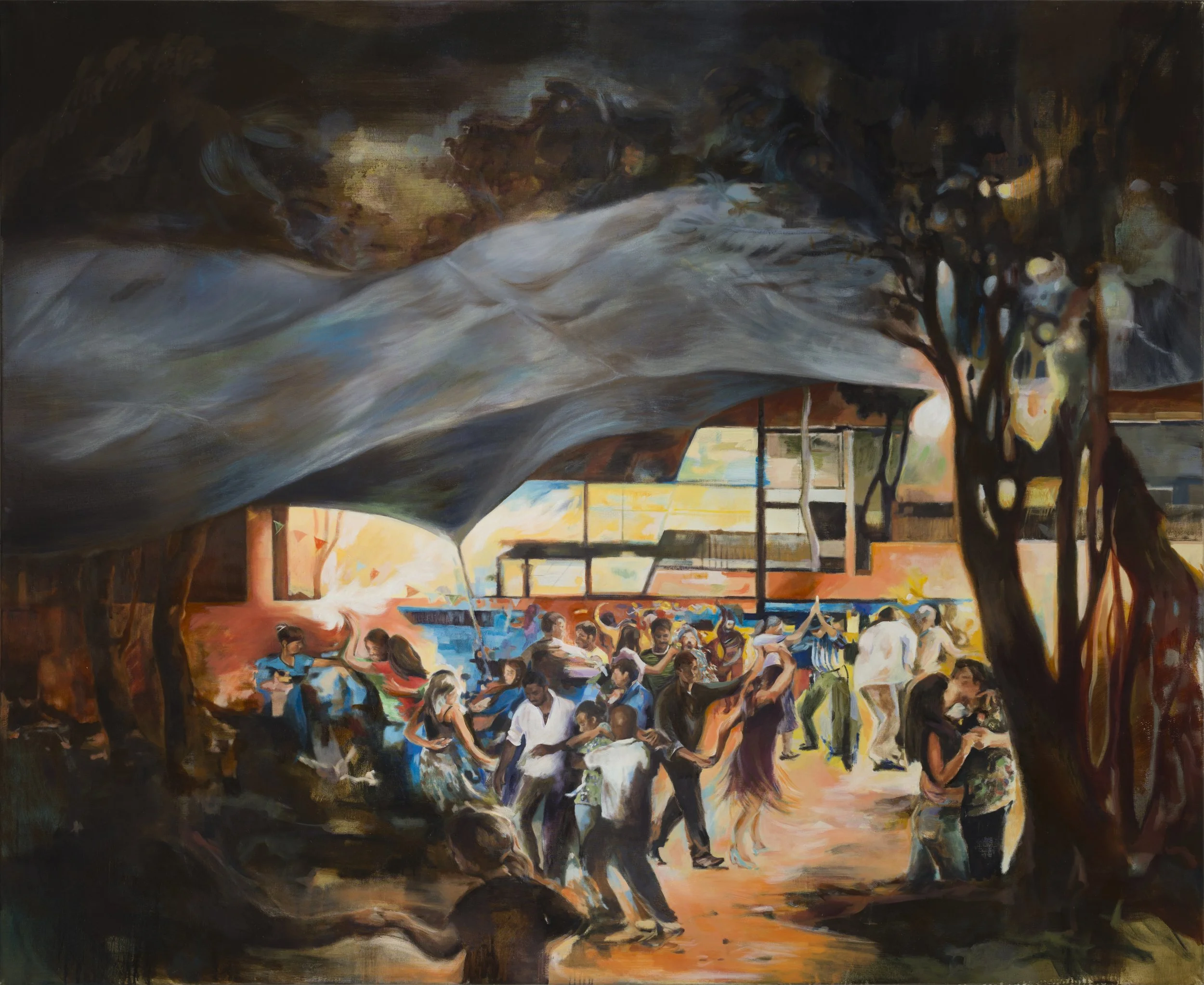
RITMO - 2024 oil on canvas - 180 x 220 cm
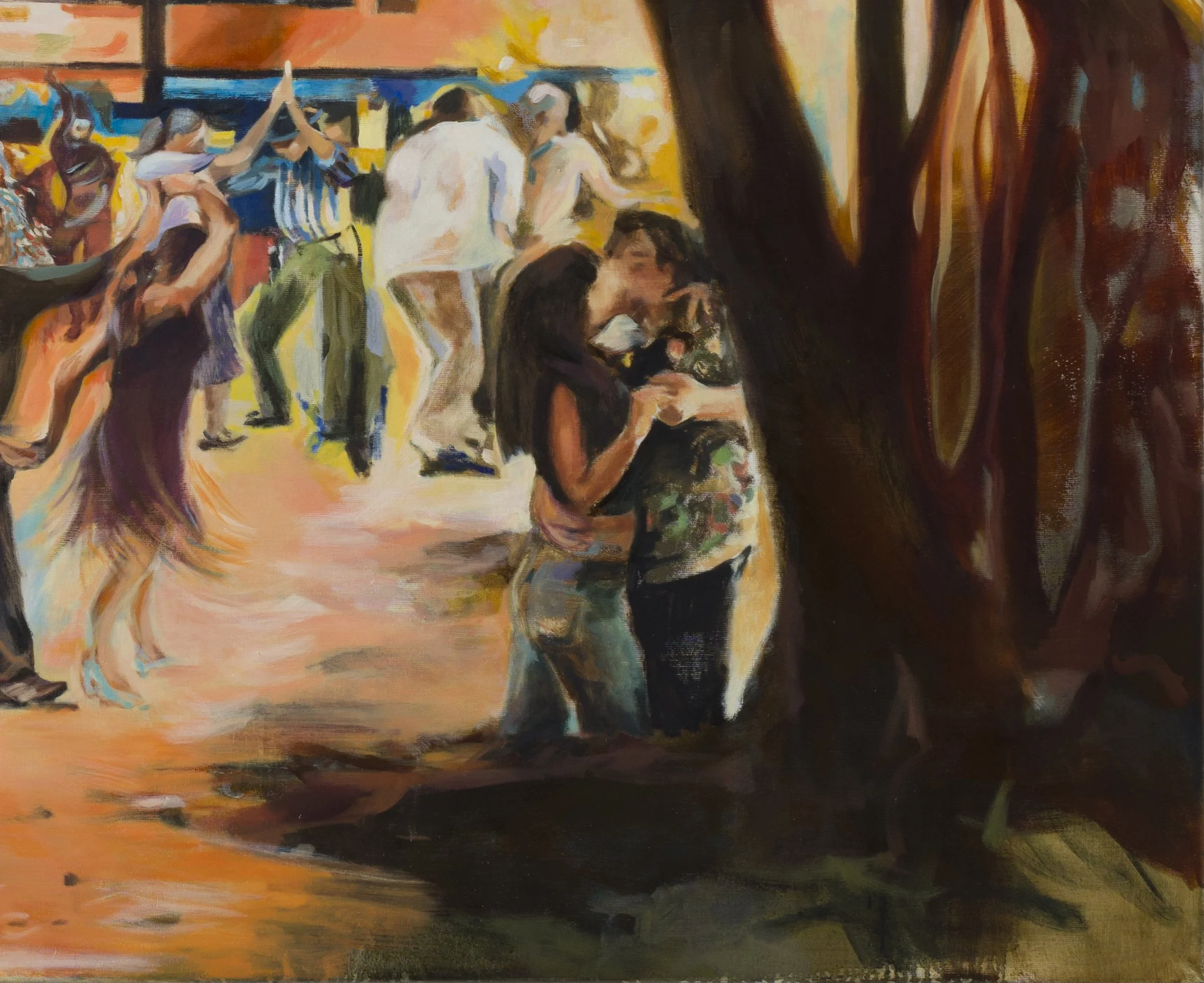
Close up from RITMO
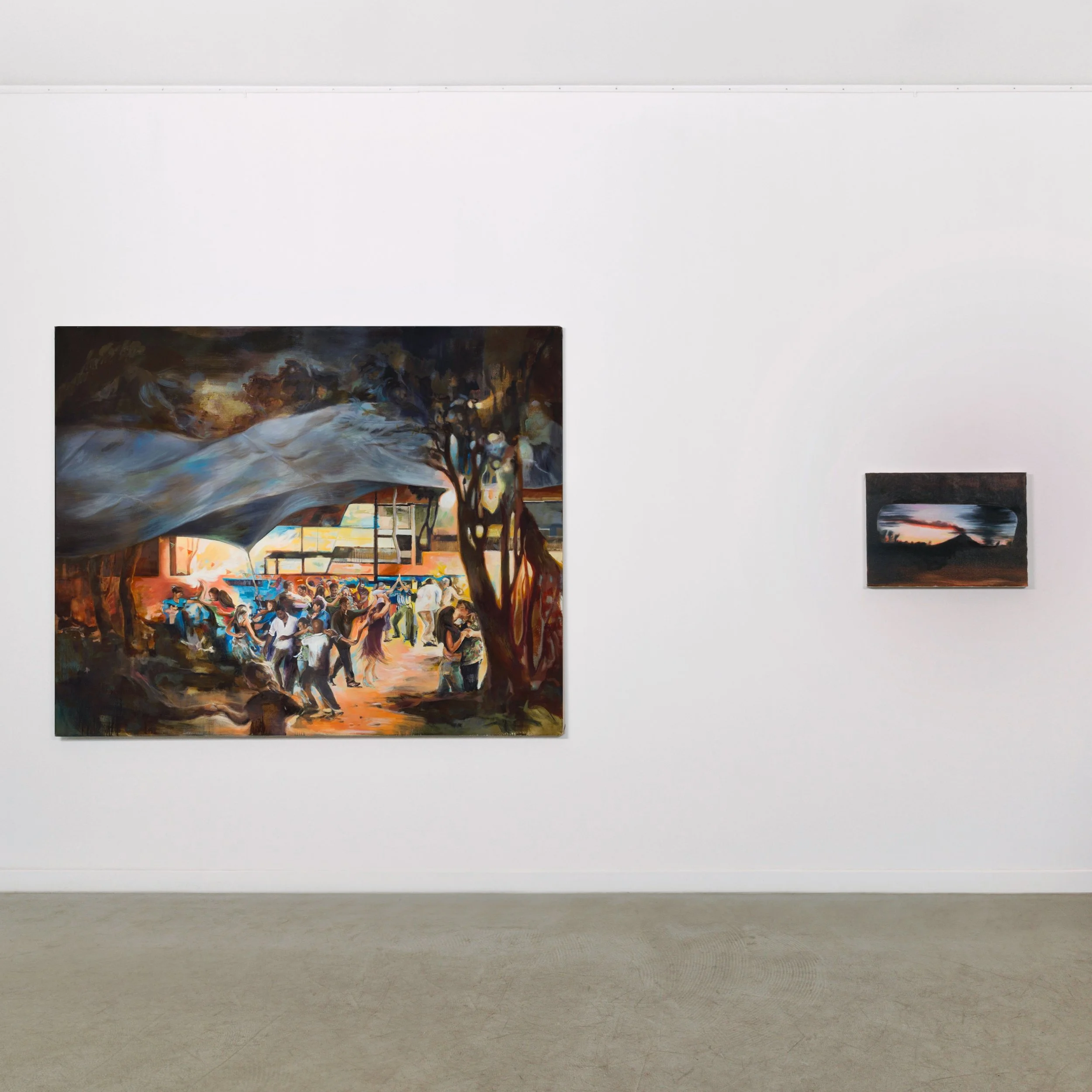
Installation view
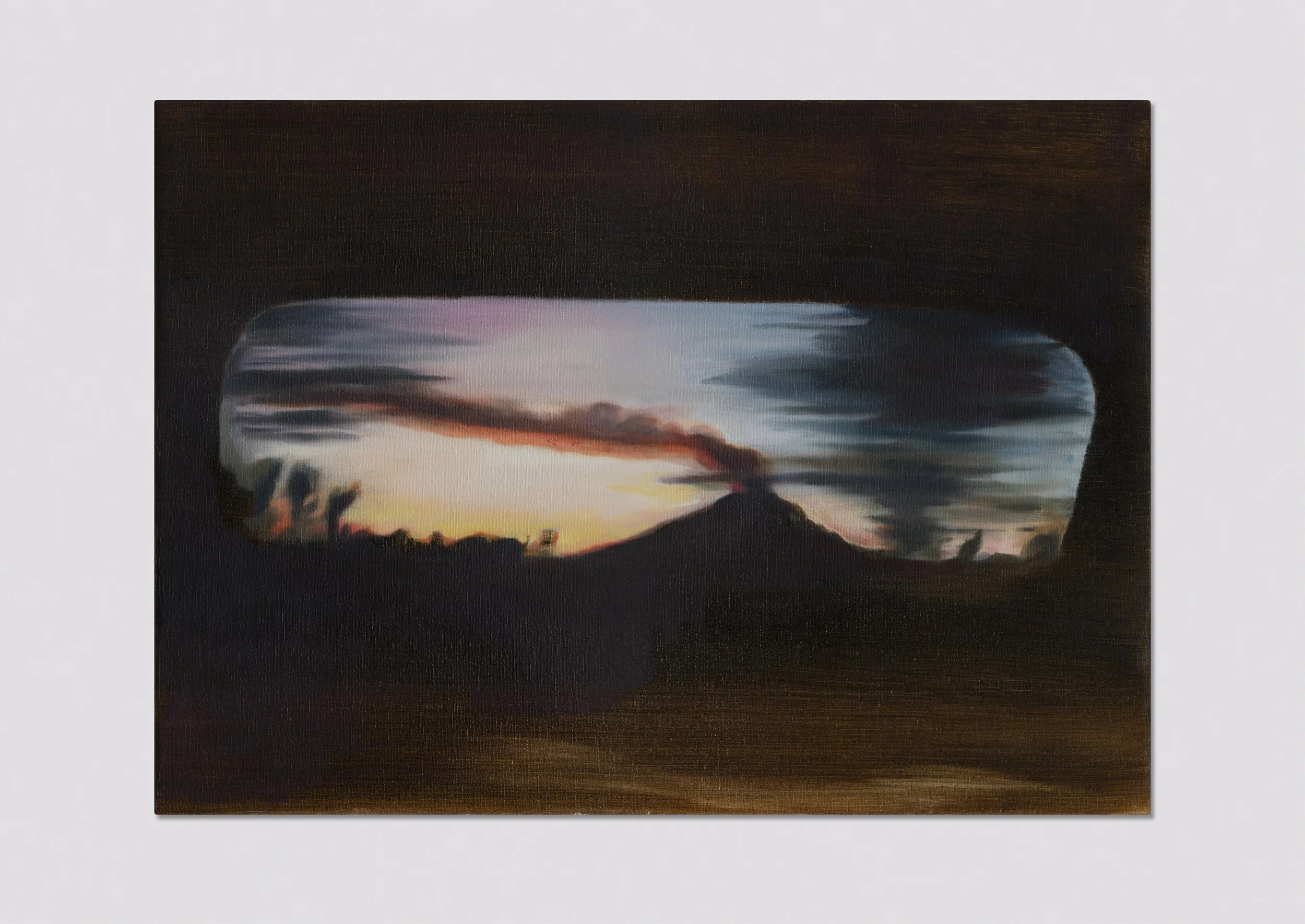
POPOCATEPETL 2024 - oil on canvas - 50 x 70 cm
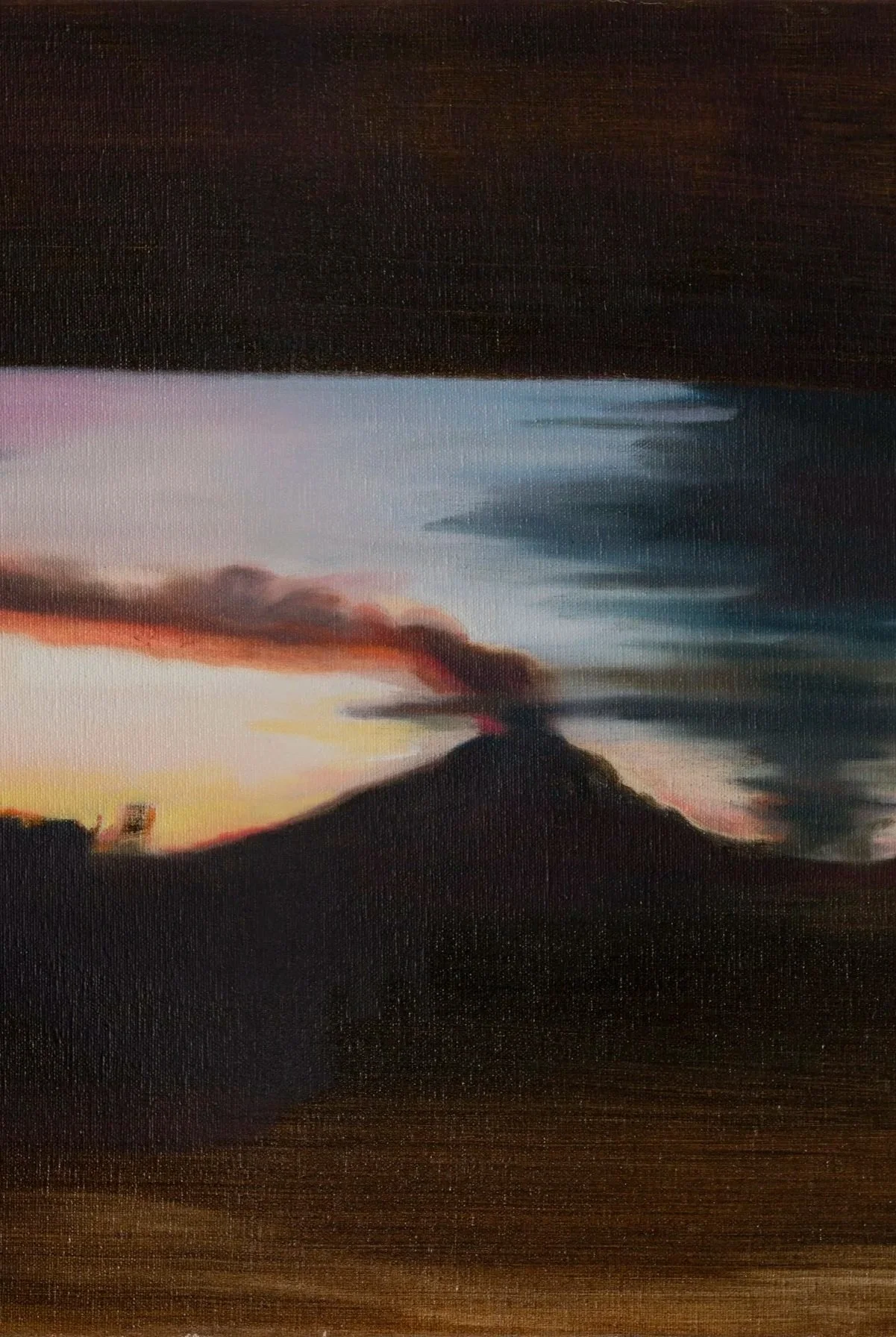
Close up from POPOCATEPETL
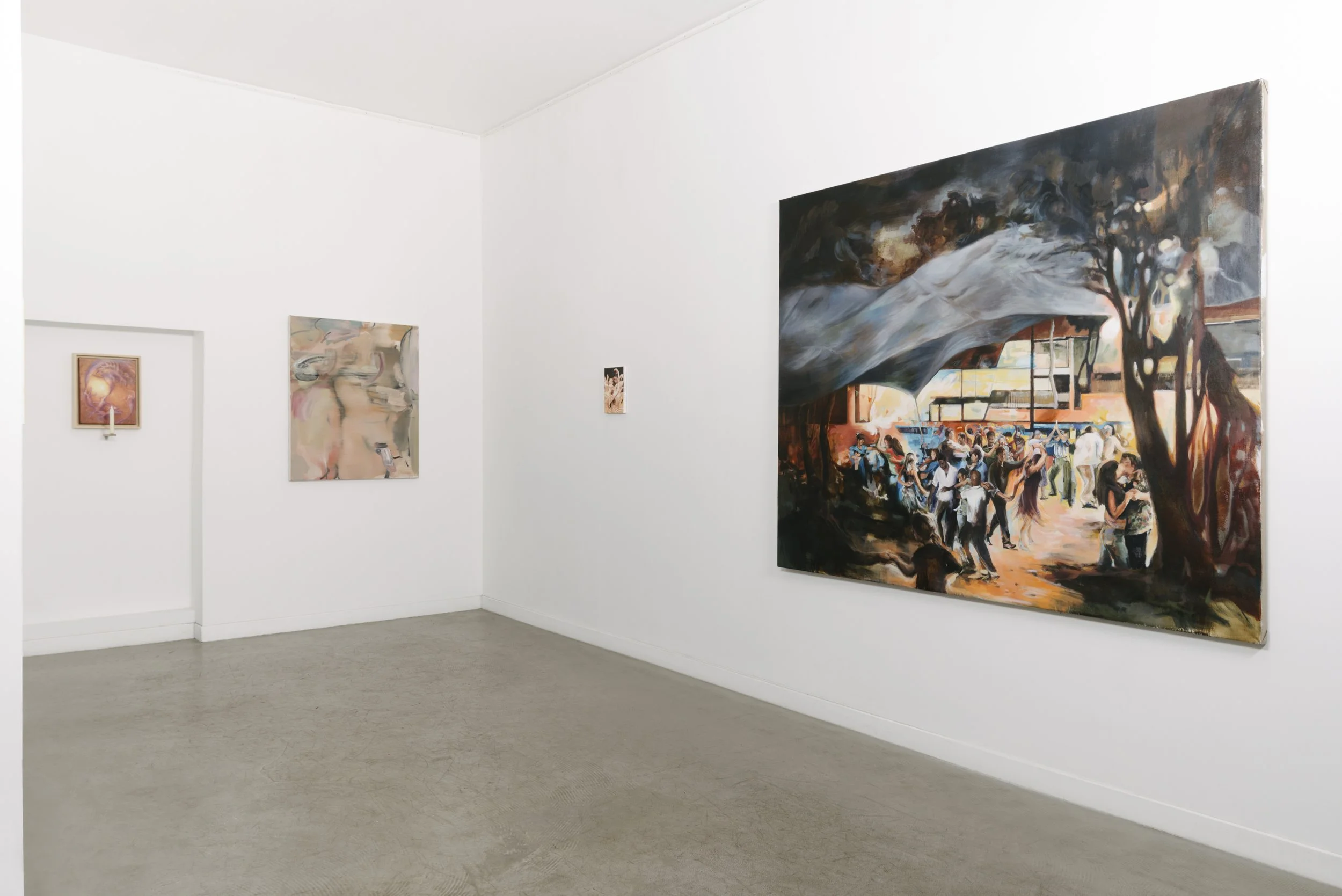
Installation vew featuring works from George Rouy and John Fou